
Independent Living Home Resident Intake and Move-In Checklist
How to run a clear, non-clinical resident intake and move-in checklist for an independent living home or shared housing: inquiry, fit review, deposits, room walk-through and referral attribution.
By Joseph Surgeon, founder of Royalty Group Homes, who runs independent living homes in Oceanside, California. · 10 min read

A good intake process fills beds with residents who fit the house, and gives every applicant the same clear, fair experience. This guide walks through a five-stage intake and move-in checklist for an independent living home or shared housing, and where the legal lines sit in California.
A note on scope. An independent living home rents rooms or beds to adults who live on their own, with no care. In California, many, if not most, such homes do not need a state license. Intake should stay on the housing side of that line.
What are the five stages of resident intake?
Run every applicant through the same stages, in the same order, and write down the date each one is completed. Consistency is what makes intake fair, and it also tells you where applicants drop out.
1. Inquiry
What to complete: Name, contact details, desired move-in date, budget, and who referred them
2. Fit conversation
What to complete: Walk through the house rules, shared spaces, quiet hours and chores, and confirm they can live independently
3. Tour
What to complete: Show the available room, shared bathroom and kitchen, and answer questions in person or by video
4. Agreement and deposit
What to complete: Signed resident agreement and house rules, deposit and first rent recorded, emergency contact on file
5. Move-in day
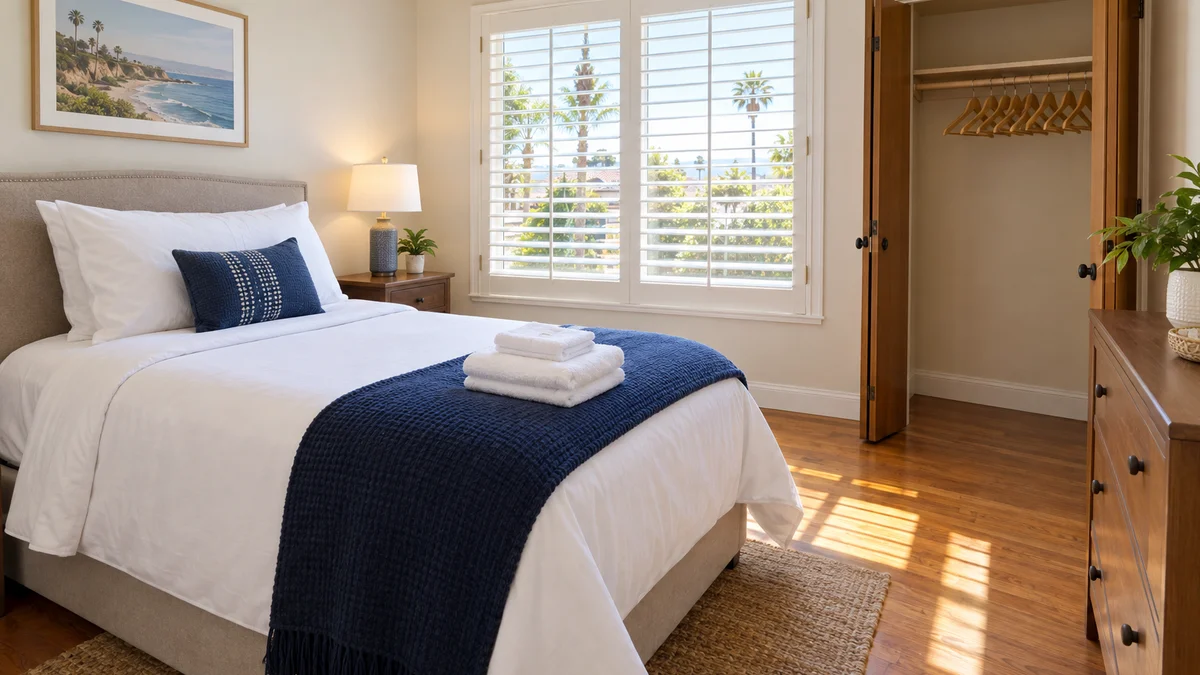
What to complete: Dated room walk-through with photos, keys issued, chore assignment given, move-in date recorded against the bed
How do you keep intake about housing, not care?
Intake questions should be about shared living: budget, move-in date, house rules, quiet hours, guests and chores. Do not collect diagnoses or medical history, and do not promise help with bathing, dressing or medication. Homes that provide care and supervision are a different business that needs a state care license, such as an adult residential facility.
If, during the fit conversation, an applicant says they need daily help with personal care or medication, the honest answer is that an independent living home is not the right setting, and to point them or their case manager toward licensed options.
How do you apply intake criteria fairly?
Write your criteria down before you take inquiries: rent amount, move-in costs, the house rules and how you verify that an applicant can pay. Apply them in the same order to every applicant, and keep a dated note of each decision.
Reasonable accommodations
The Fair Housing Act protects people with disabilities in housing, and federal guidance explains that housing providers and cities may have to make reasonable accommodations to their rules. Keep a short written request form, answer each request in writing, and record what was agreed. Get legal advice before adding questions about disability to intake forms.
What are the deposit rules in California?
Under California Civil Code Section 1950.5, a residential security deposit is generally capped at one month's rent in addition to first month's rent, with a narrow exception allowing up to two months for certain small landlords. Deposits can only be used for unpaid rent, damage beyond ordinary wear and tear, and cleaning back to the move-in condition.
Within 21 days after a resident moves out, you must return the deposit or send an itemized statement of deductions, with the receipts and photos the law requires. A dated move-in walk-through with photos is the simplest way to support any deduction later.
What should happen on move-in day?
- Walk the room together and photograph its condition, then both sign and date the record.
- Hand over keys and note which keys were issued.
- Review the house rules and give the resident their daily chore checklist.
- Confirm emergency contacts and how to report a repair.
- Record the move-in date and first rent against the bed.
Explain how room checks work, too. In California, Civil Code Section 1954 requires reasonable written notice before a housing provider enters a resident's unit, except in an emergency. Our guide to house rules and daily chores covers what to put in the rules themselves.
How do you track referral partners at intake?
Many residents arrive through case managers, discharge planners and community organizations. Record the referring partner at the inquiry stage and carry it through to the bed that was filled, so you can see which partners actually produce move-ins.
Never pay or accept anything of value per referral. For recovery housing, paying for referrals can be a federal crime under 18 U.S.C. 220 when services are covered by a health care benefit program. Build referral relationships on a reliable, clean house and quick, honest answers about open beds.
How do you keep intake, beds and rent in one place?
Intake works best when inquiries, open beds and rent live in the same place. Royalty Group Homes tracks inquiries, which referral partner sent each one, the live bed board and a rent ledger for each resident, so you can see where every applicant is and which bed they will fill.
Your first house is free with every feature; two or three houses are $99 a month, and four or more are $199 a month. It does not score or rank applicants, and it has no medication or care-plan module, which fits a home that stays independent living.
Frequently asked questions
What should a resident intake checklist include for an independent living home?
Cover the inquiry details, a fit conversation about the house rules and shared living, a tour, the signed resident agreement and house rules, the deposit and first rent, emergency contacts, and a dated move-in room walk-through with photos. Keep it about housing, not care or medical history.
Can an independent living home ask about an applicant's medical conditions?
Independent living homes provide housing, not care, so intake should not collect diagnoses or medical history. Ask whether the applicant can live independently under the house rules. Questions about disability are sensitive under fair housing law; get legal advice before adding any to your intake forms.
How much can I charge for a security deposit in California?
Under California Civil Code 1950.5, a residential security deposit is generally capped at one month's rent in addition to first month's rent, with a narrow exception of up to two months for certain small landlords. After move-out, you have 21 days to return the deposit or send an itemized statement of deductions.
How should I handle referrals from case managers and discharge planners?
Log every referral against the partner who sent it and the bed it filled, so you know which partners actually produce move-ins. Never pay or accept anything of value per referral; for recovery housing, that can be a federal crime under 18 U.S.C. 220.
What should happen on move-in day?
Walk the room with the resident, note and photograph its condition, hand over keys, review the house rules and daily chore checklist, confirm emergency contacts, and record the move-in date against the bed. A dated walk-through record makes the move-out inspection and deposit return much simpler.
Related reading
Sources
- Group Home Technical Advisory (2022), page 33, California Department of Housing and Community Development. Many, if not most, group homes do not require a state license.
- Adult Facility Types Licensed by CDSS, California Department of Social Services. Which homes need a state care license, such as an adult residential facility.
- Joint Statement on State and Local Land Use Laws and the Fair Housing Act, U.S. Department of Justice and U.S. Department of Housing and Urban Development. People in recovery are protected under the Fair Housing Act, and cities may have to grant reasonable accommodations to homes for them.
- California Civil Code Section 1950.5, Security for a Rental Agreement, California State Legislature. California rules for residential security deposits, including deposit caps, pre-departure inspection rights, and the 21-day itemized statement and return deadline.
- California Civil Code Section 1954, Landlord's Right of Access, California State Legislature. When a California housing provider may enter a dwelling unit and the written notice required for non-emergency entry.
- 18 U.S.C. 220, Illegal remunerations for referrals to recovery homes, U.S. Government Publishing Office. Paying or receiving anything of value for referrals to a recovery home is a federal crime when services are covered by a health care benefit program.
This article is general information, not legal advice. Confirm the rules for your state, county and city, and review your intake forms and resident agreement with an attorney.
Ready to track inquiries, beds and rent in one place? Put your first house on the bed board free, with every feature, no card and no end date.