
How to Furnish and Set Up an Independent Living Home
Room-by-room furnishing and setup checklist for an independent living home or shared housing: bedrooms, two-fridge kitchen storage, safety devices and tax records.
By Joseph Surgeon, founder of Royalty Group Homes, who runs independent living homes in Oceanside, California. · 10 min read
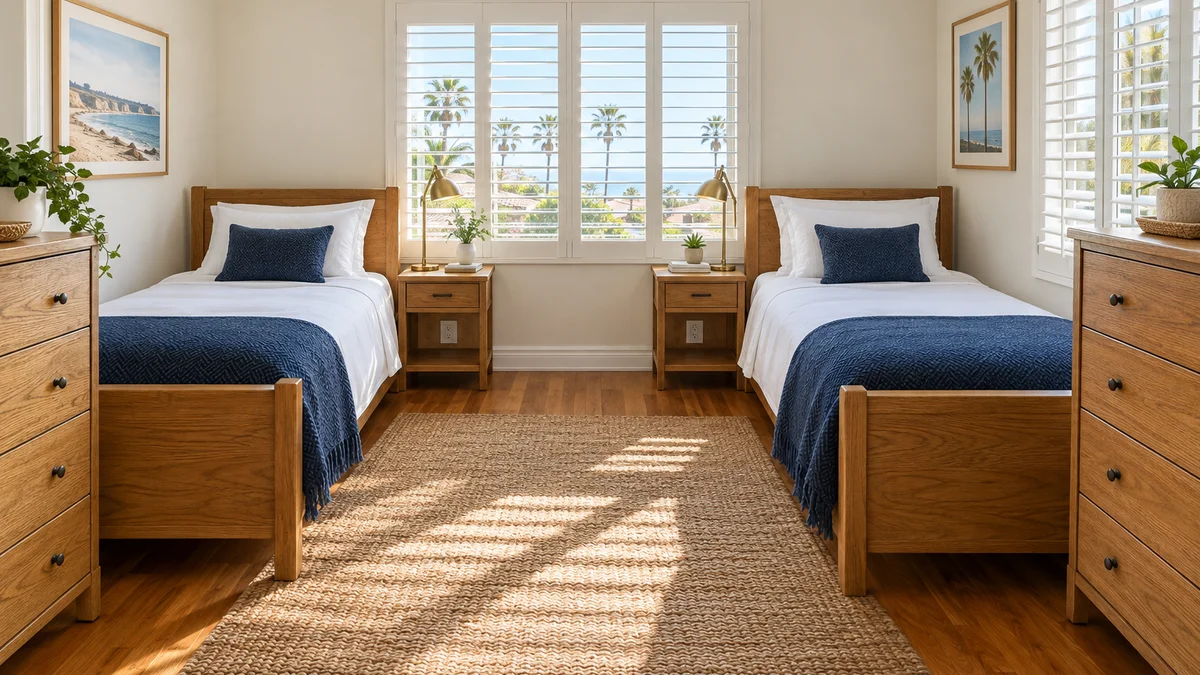
How you furnish an independent living home shapes daily life more than almost any rule on the wall. When two housemates share a bedroom and both have the exact same sturdy bed, their own reading lamp, their own dresser and their own labeled shelf in the kitchen, the house feels fair and settled from the moment they unpack. When storage is uneven or a single refrigerator is crammed with seven people's groceries, small annoyances pile up fast.
A note on scope. An independent living home, also called shared housing, rents rooms or beds to adults who live on their own, with no care. In California, many, if not most, such homes do not need a state license. Every furnishing choice should reflect a welcoming residential home — never a medical or institutional facility.
What belongs on the room-by-room furnishing and setup checklist?
Buy durable, residential-grade pieces in consistent finishes so you can swap or replace items easily during room turnovers.
1. Shared or private bedrooms (per bed)
Standard setup per room or bed: Solid wood or heavy-duty metal bed frame, mattress with zippered encasement, nightstand, reading lamp, Surge-protected outlet strip, 4-drawer dresser, closet rod divider, and 2 sets of white linens
Why it matters in shared housing: Equal personal space and lighting prevent roommate friction and make bed turnovers fast
2. Shared kitchen and dining
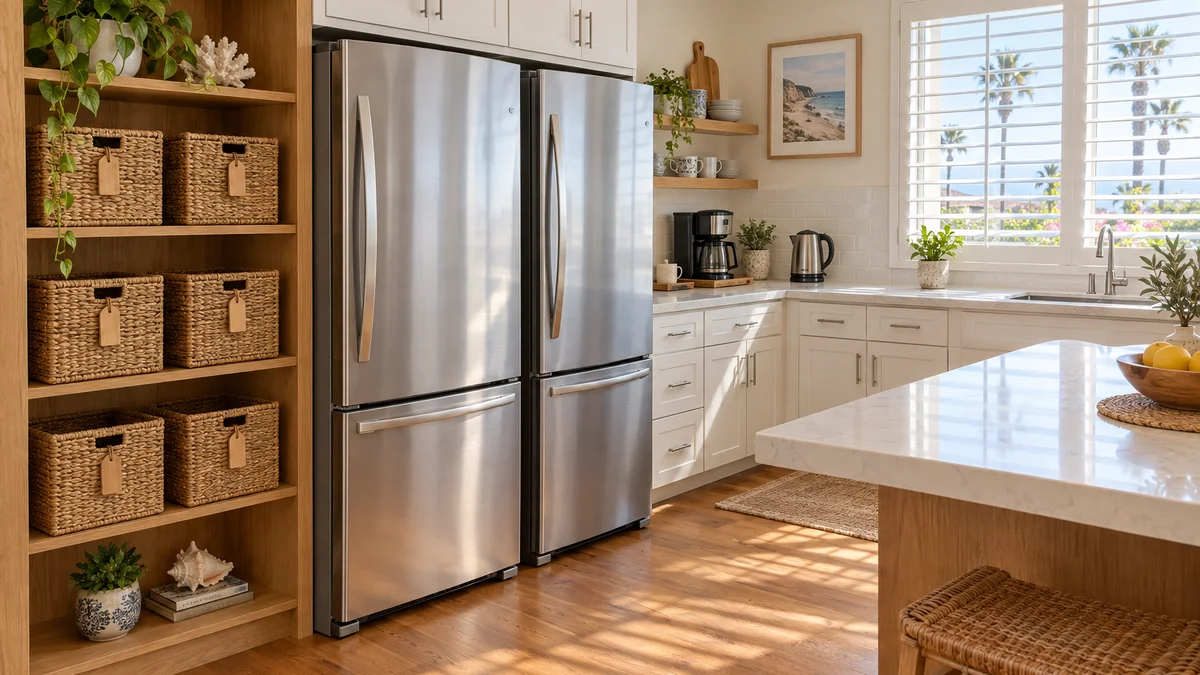
Standard setup per room or bed: Two full-size refrigerators (for 5+ beds), 1 labeled pantry basket and 1 labeled fridge shelf per bed, durable pots and pans, microwave, coffee maker, toaster, and a dining table with a chair for every resident
Why it matters in shared housing: Clear food storage stops missing-grocery disputes and lets housemates cook on their own schedules
3. Shared bathrooms
Standard setup per room or bed: Individual shower caddy or labeled cabinet cubby per resident, high-CFM exhaust fan, non-slip bath mat, plunger and toilet brush in each bath, and sturdy towel hooks
Why it matters in shared housing: Keeps counters clear and prevents moisture buildup when several adults use the same bathroom daily
4. Living room and laundry
Standard setup per room or bed: Washable slipcovered or leather sofa, armchairs, strong whole-home Wi-Fi, commercial-duty washer and dryer, clean lint trap bin, and a hallway bulletin board
Why it matters in shared housing: Gives residents a comfortable place to relax and keeps laundry moving without bottlenecks
5. Safety and exterior grounds
Standard setup per room or bed: State Fire Marshal-approved smoke alarms and carbon monoxide devices, wall-mounted fire extinguisher, first-aid kit, exterior motion lighting, covered trash and recycling bins, and clear walkways
Why it matters in shared housing: Meets California habitability and life-safety standards from day one
How should you lay out a shared two-bed room?
In a two-bed shared room, symmetry and privacy do the heavy lifting:
- Place nightstands between the beds: Putting both nightstands in the center — rather than pushing beds close together — gives each resident a wider personal lane and keeps phones, glasses and lamps within arm's reach.
- Give every bed its own task light and outlet: When one housemate reads at 9:30 PM while the other wants the overhead light off, a warm directional bedside lamp keeps the room peaceful.
- Use white cotton sheets and zippered mattress encasements: Standardizing on one bed size (such as twin XL in shared rooms) and white cotton linens means you only need one backup linen bin in the hallway closet to reset a bed in 20 minutes.
What California safety and habitability standards apply to house setup?
Before you list your first bed or host a referral partner tour, walk the house against three California statutes:
1. Civil Code Section 1941.1 habitability checklist
Under California Civil Code Section 1941.1, a residential dwelling must have effective weatherproofing and unbroken windows and doors, working plumbing and hot and cold running water, safe heating facilities, working electrical lighting and wiring, clean grounds and adequate trash receptacles, and safe floors, stairways and railings.
2. Smoke alarms in sleeping rooms and hallways
Under California Health and Safety Code Section 13113.7, dwellings intended for human occupancy must have State Fire Marshal-approved smoke alarms, and the owner of a rented dwelling must test and maintain them and ensure they are operable whenever a new tenancy begins.
3. Carbon monoxide devices
Under California Health and Safety Code Section 17926, the owner of a dwelling unit intended for human occupancy that has a fossil-fuel-burning heater or appliance, a fireplace, or an attached garage must install State Fire Marshal-approved carbon monoxide devices in accordance with building standards and the manufacturer's instructions. Check both your smoke and carbon monoxide alarms during every monthly maintenance and safety walk-through.
How should you track furnishing receipts and replacement costs?
Furnishing a shared home involves dozens of purchases across beds, dressers, refrigerators and small kitchen items. Under IRS Publication 527 (Residential Rental Property), ordinary repairs and maintenance are generally deductible as current rental expenses, while appliances, carpeting and furniture used in residential rental property are generally treated as 5-year property recovered through depreciation under the General Depreciation System (GDS), unless a qualifying safe harbor election (such as the de minimis safe harbor) applies.
Following IRS recordkeeping rules, keep a dedicated folder of itemized vendor invoices showing the purchase date, item description, house address and amount paid so your tax preparer can separate capital furnishings from routine supplies and repairs at year-end.
How do you map every room and bed once the house is furnished?
Once the beds are built and the pantry bins are labeled, mirror that exact room and bed layout on your digital bed board. Royalty Group Homes lets you set up every house, room and bed in minutes, attach each resident's resident agreement and move-in date to their bed, and track monthly rent on a live ledger.
Your first house is free with every feature; two or three houses are $99 a month, and four or more are $199 a month.
Frequently asked questions
What furniture should come with each bed in an independent living home?
Each bed should include a sturdy twin XL or full bed frame, a supportive mattress with a zippered waterproof and bedbug-rated encasement, two sets of washable sheets and towels, a nightstand with a reading lamp and power strip, a dedicated four-drawer dresser, and an assigned closet rod section or wardrobe.
How many refrigerators does a shared home need?
Once an independent living home houses more than four or five independent adults who buy and cook their own groceries, a single standard refrigerator becomes the biggest source of roommate friction. Installing two full-size refrigerators side by side and assigning each bed a labeled shelf and pantry basket eliminates crowded shelves and missing-food disputes.
What smoke and carbon monoxide alarms are required in a California shared home?
Under California Health and Safety Code Section 13113.7, dwellings intended for human occupancy must have State Fire Marshal-approved smoke alarms, and owners of rented dwellings must test and maintain them and ensure they work at the start of each tenancy. Under Health and Safety Code Section 17926, any dwelling unit with a fossil-fuel-burning heater or appliance, a fireplace, or an attached garage must also have State Fire Marshal-approved carbon monoxide devices installed.
How are furniture and appliances treated on taxes for a residential rental home?
According to IRS Publication 527 (Residential Rental Property), ordinary repairs and maintenance are generally deductible as current rental expenses, whereas appliances, carpeting and furniture used in residential rental property are generally 5-year property depreciated under the General Depreciation System (GDS), unless a qualifying de minimis or routine maintenance safe harbor election applies.
Why should independent living home furnishings avoid a clinical look?
An independent living home is ordinary residential shared housing for adults who live on their own, not a hospital or licensed care facility. Warm residential furniture, residential lighting and individual food storage make residents proud of where they live and show referral partners and neighbors a well-kept neighborhood home.
Related reading
Sources
- Group Home Technical Advisory (2022), page 33, California Department of Housing and Community Development. Many, if not most, group homes do not require a state license.
- California Civil Code Section 1941.1, Untenantable Dwelling Characteristics, California State Legislature. Minimum habitability standards for California residential dwellings, including weatherproofing, plumbing, hot and cold water, heating, electrical, clean premises, and working floors, stairs and railings.
- California Health and Safety Code Section 13113.7, Smoke Alarms in Dwellings, California State Legislature. State Fire Marshal-approved smoke alarms are required in California dwellings intended for human occupancy, and owners of rented dwellings must test and maintain them and ensure they are operable when a new tenancy begins.
- California Health and Safety Code Section 17926, Carbon Monoxide Devices, California State Legislature. Owners of California dwelling units intended for human occupancy with a fossil-fuel-burning heater or appliance, fireplace, or attached garage must install State Fire Marshal-approved carbon monoxide devices.
- Publication 527, Residential Rental Property, Internal Revenue Service. IRS rules for residential rental property distinguishing ordinary repairs and maintenance from capitalized improvements and 5-year GDS depreciation for rental appliances, carpeting and furniture.
- Recordkeeping, Internal Revenue Service. Businesses must keep records that support the income and expenses they report.
This article is general information, not legal or tax advice. Confirm local building, fire and housing codes with your city or county, and consult a qualified tax professional on depreciation and safe-harbor elections.
Setting up a new house or organizing an existing portfolio? Put your first house on the bed board free, with every feature, no card and no end date.