
Independent Living Home Emergency and Utility Outage Plan
How to set up an emergency and utility outage plan for an independent living home or shared housing: FEMA supply kits, utility shutoffs, alarms and entry rules.
By Joseph Surgeon, founder of Royalty Group Homes, who runs independent living homes in Oceanside, California. · 10 min read
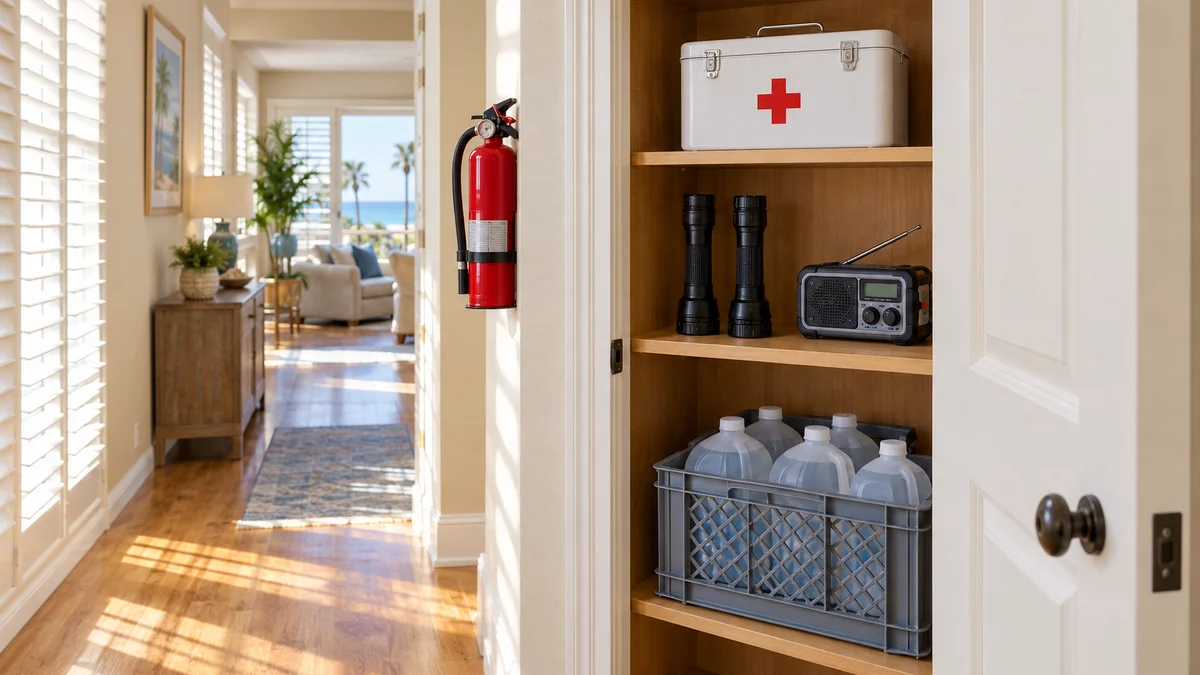
When the power goes out at 9:00 PM or a supply line starts leaking under a bathroom sink, housemates in a shared home should not have to hunt through dark kitchen drawers for a flashlight or guess where the main water valve sits outside. A clear, one-page emergency and utility outage plan — paired with a stocked hallway utility shelf — keeps a 15-minute hiccup from turning into household chaos.
A note on scope. An independent living home, also called shared housing, rents rooms or beds to adults who live on their own, with no care. In California, many, if not most, such homes do not need a state license. Your emergency plan should reflect that residential boundary: every resident in an independent living home must be able to exit the house independently and manage their own personal and medical needs, whereas individuals who require 24-hour care and supervision belong in facilities licensed by CDSS Adult Care Licensing.
What belongs in a five-part shared home emergency and outage plan?
Walk every new resident through these five locations during intake and move-in, and keep the summary sheet pinned to your kitchen or hallway bulletin board.
1. Emergency numbers and house address
What to post and stock: Full street address and nearest cross street, 911, electric/gas/water outage lines, poison control, and the operator's phone number
Where to keep it: Framed or laminated on the kitchen/hallway bulletin board
2. Fire, smoke and CO response
What to post and stock: Two unobstructed exit paths from every bedroom, wall-mounted fire extinguishers, and an outdoor meeting spot at the front curb
Where to keep it: Hallway diagram and kitchen/hallway extinguisher mounts
3. Utility shutoffs and outage rules
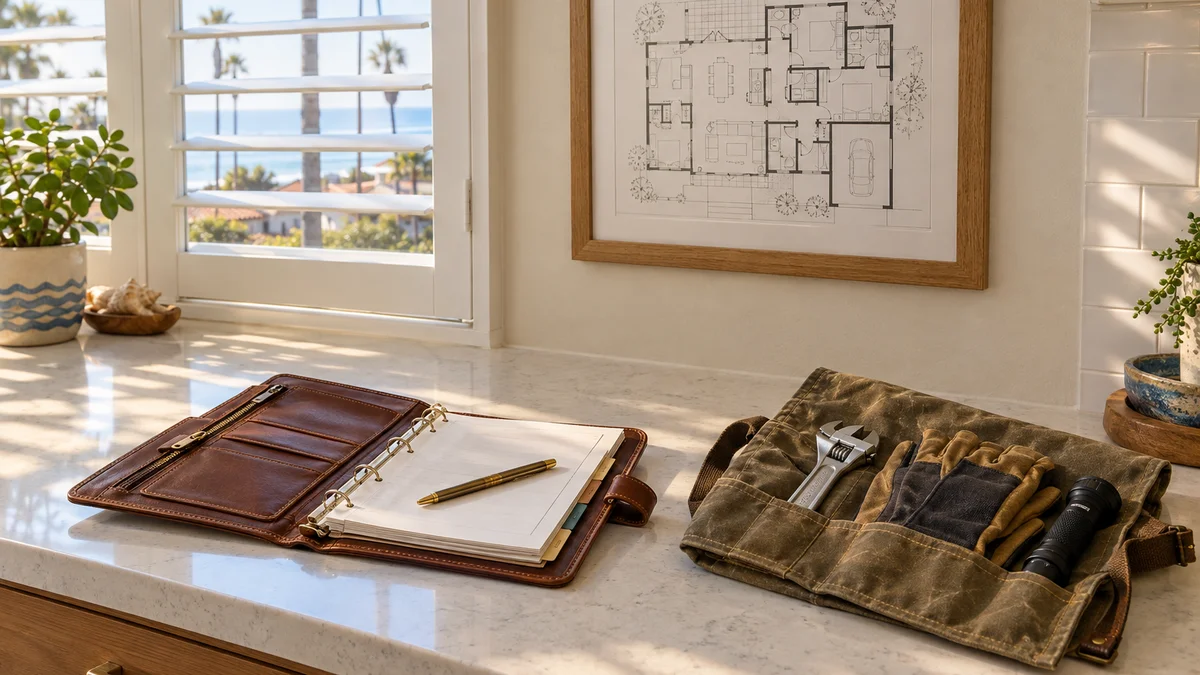
What to post and stock: Labeled main water shutoff valve, electrical breaker panel directory, and gas meter location (with a wrench stored nearby)
Where to keep it: Exterior utility box and hallway emergency binder
4. Household disaster supply kit
What to post and stock: Stored drinking water, non-perishable food, LED flashlights, extra batteries, NOAA weather radio, first-aid kit, whistle and sanitation bags
Where to keep it: Dedicated shelf in the hallway linen or utility closet
5. Resident emergency contacts
What to post and stock: Each resident's current phone number and designated emergency contact person
Where to keep it: Private operator roster and secure digital bed board
What should you stock in the shared hallway emergency kit?
Federal preparedness guidance on Ready.gov (Basic Disaster Supplies Kit) recommends keeping basic household supplies stored in one or two easy-to-carry containers so residents have what they need if power or water is interrupted for several days:
- Water and non-perishable food: Ready.gov recommends one gallon of water per person per day for several days (for drinking and sanitation) and a multi-day supply of non-perishable food with a manual can opener.
- Lighting and communication: Stock heavy-duty LED flashlights (never candles, which create a fire hazard in shared bedrooms), extra batteries, a battery-powered or hand-crank NOAA weather radio, and backup phone battery packs.
- First aid, tools and sanitation: Include a stocked first-aid kit, a whistle to signal for help, dust masks, moist towelettes and heavy-duty garbage bags, and a wrench or pliers to turn off utilities when instructed by authorities or during an active leak.
How do California alarm rules and emergency room entry work?
Three California statutes govern life-safety equipment and room entry in a shared residential home:
1. Smoke alarms and carbon monoxide devices
Under California Health and Safety Code Section 13113.7, dwellings intended for human occupancy must have State Fire Marshal-approved smoke alarms, and the owner of a rented dwelling is responsible for testing and maintaining them and making sure they work whenever a new tenancy begins. Under California Health and Safety Code Section 17926, any dwelling unit with a fossil-fuel-burning heater or appliance, a fireplace, or an attached garage must also have State Fire Marshal-approved carbon monoxide devices installed.
2. Emergency entry vs. 24-hour written notice
Under California Civil Code Section 1954, a landlord may enter a dwelling unit without the resident's consent or advance notice in an actual emergency — such as a fire, smoke alarm activation with suspected hazard, or active water flooding from a bedroom bathroom. For all routine preparedness checks — such as testing bedroom smoke alarms, replacing batteries or completing your monthly maintenance and safety walk-through — you must give reasonable written notice (24 hours is presumed reasonable) and enter during normal business hours.
3. Two-minute reminder at the monthly house meeting
Take two minutes during your monthly house meeting to point out the fire extinguishers, remind housemates never to prop open fire doors or disable smoke alarms, and review what to do during a summer power outage (keep the shared refrigerators closed so food stays cold, use LED flashlights instead of candles, and check the house group text for utility restoration updates).
How do you keep every resident's emergency contact at your fingertips?
When an urgent situation happens at a house, you should never have to dig through a paper filing cabinet to find out who is currently in Room B, Bed 2 or who their emergency contact is. Royalty Group Homes keeps your live bed board and resident roster on your phone and computer, so you always know who lives in every bed across every house.
Your first house is free with every feature; two or three houses are $99 a month, and four or more are $199 a month.
Frequently asked questions
What belongs on the posted emergency sheet in an independent living home?
Keep it to one page on the hallway or kitchen bulletin board: the exact street address and nearest cross street (for callers speaking to 911), emergency and non-emergency local numbers, electric, gas and water utility outage lines, the house manager or operator's phone number, two clear exit paths from every bedroom, an outdoor meeting spot at the front curb, and the location of fire extinguishers, the first-aid kit, flashlights and main utility shutoffs.
What supplies should be in a shared home's emergency kit?
Under federal Ready.gov guidelines for a Basic Disaster Supplies Kit, stock one gallon of water per person per day for several days, a multi-day supply of non-perishable food, a battery-powered or hand-crank NOAA weather radio, flashlights with extra batteries, a first-aid kit, a whistle, sanitation bags and towelettes, a manual can opener, and a wrench or pliers to turn off utilities.
When can an operator enter a resident's bedroom without 24-hour written notice?
Under California Civil Code Section 1954, a landlord may enter a dwelling unit without the resident's consent or advance written notice only in an actual emergency — such as an active fire, a burst water pipe, or a gas leak. For non-emergency smoke alarm tests, filter changes or scheduled repairs, you must give reasonable written notice (24 hours is presumed reasonable) and enter during normal business hours.
Does having a posted emergency plan turn a shared home into a licensed care facility?
No. Providing smoke and carbon monoxide alarms, fire extinguishers, posted exit maps and emergency flashlights is standard residential property safety. Unlike licensed Adult Residential Facilities regulated by the California Department of Social Services, an independent living home rents rooms to adults who can evacuate on their own and manage their own personal needs.
How often should emergency supplies and alarms be checked?
Check smoke alarms, carbon monoxide devices, fire extinguisher pressure gauges and flashlight batteries during your monthly maintenance walk-through, and rotate stored emergency water and non-perishable items every six months.
Related reading
Sources
- Group Home Technical Advisory (2022), page 33, California Department of Housing and Community Development. Many, if not most, group homes do not require a state license.
- Adult Facility Types Licensed by CDSS, California Department of Social Services. Which homes need a state care license, such as an adult residential facility.
- Build A Kit — Basic Disaster Supplies Kit, U.S. Department of Homeland Security (Ready.gov). Federal household emergency kit guidelines including one gallon of water per person per day for several days, non-perishable food, battery or hand-crank radio, flashlight, first-aid kit, extra batteries, whistle, and a wrench or pliers to turn off utilities.
- California Health and Safety Code Section 13113.7, Smoke Alarms in Dwellings, California State Legislature. State Fire Marshal-approved smoke alarms are required in California dwellings intended for human occupancy, and owners of rented dwellings must test and maintain them and ensure they are operable when a new tenancy begins.
- California Health and Safety Code Section 17926, Carbon Monoxide Devices, California State Legislature. Owners of California dwelling units intended for human occupancy with a fossil-fuel-burning heater or appliance, fireplace, or attached garage must install State Fire Marshal-approved carbon monoxide devices.
- California Civil Code Section 1954, Landlord's Right of Access, California State Legislature. When a California housing provider may enter a dwelling unit and the written notice required for non-emergency entry.
This article is general information, not legal advice or fire-code certification. Confirm local fire, building and housing requirements with your city or county fire marshal and consult an attorney on your notice and emergency procedures.
Want a live bed board and resident roster for every house in your portfolio? Put your first house on the bed board free, with every feature, no card and no end date.