
How to Run an Open-Bed House Tour in an Independent Living Home
How to run a 20-minute open-bed house tour for an independent living home or shared housing: Civil Code 1954 notice, five-stop walk-through and fair housing rules.
By Joseph Surgeon, founder of Royalty Group Homes, who runs independent living homes in Oceanside, California. · 10 min read
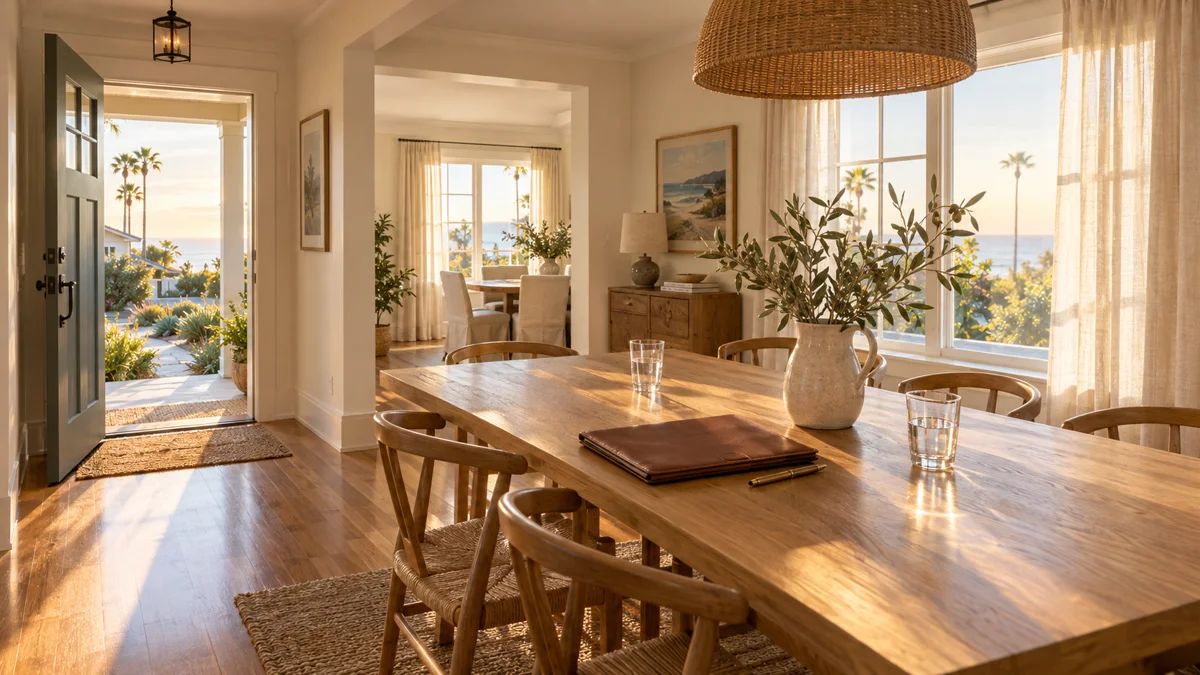
A prospective resident — or a hospital discharge planner, VA case manager or family member — usually decides within the first five minutes of a house tour whether a shared home feels calm, clean and well-run. When the open bed is freshly made, the kitchen refrigerators have labeled bins, and the operator hands over a one-page printed fact sheet at the dining table, good residents say yes on the spot.
When a tour is improvised — knocking on a closed bedroom door unannounced, guessing which fridge shelf is open, or quoting different deposit numbers from memory — both the prospective resident and your current housemates lose confidence.
A note on scope. An independent living home, also called shared housing, rents rooms or beds to adults who live on their own, with no care or supervision. In California, many, if not most, such homes do not need a state license. Unlike an Adult Residential Facility licensed by CDSS Adult Care Licensing, an independent living home does not provide hands-on personal care, medication management or 24-hour supervision. Stating that residential boundary clearly on every tour ensures you only place independent adults who are a true fit for shared housing.
What is the five-stop route for a 20-minute open-bed house tour?
Whether you or your house manager leads the showing, walk every visitor through the same five stops in the same order:
Stop 1. Front curb, driveway & entryway (3 min)
What to show and point out: Assigned driveway lanes, street parking etiquette, exterior lighting, smart lock or key entry, and the hallway bulletin board with the emergency map
Questions to answer up front: Where residents and daytime visitors park, and how 24/7 resident key access works alongside household quiet hours
Stop 2. Shared kitchen & pantry (4 min)
What to show and point out: Two full-size refrigerators kept at 40 °F or below, the exact labeled fridge bin and dry-pantry basket assigned to the open bed, and the 30-minute dish rule
Questions to answer up front: How groceries are stored separately by bed code and when the weekly Sunday fridge clean-out happens
Stop 3. Bathrooms, laundry & patio (3 min)
What to show and point out: Shared bathrooms, laundry machines, linen closet, and the backyard patio seating area
Questions to answer up front: How the daily chore rotation keeps shared bathrooms clean and which hours the laundry room is open
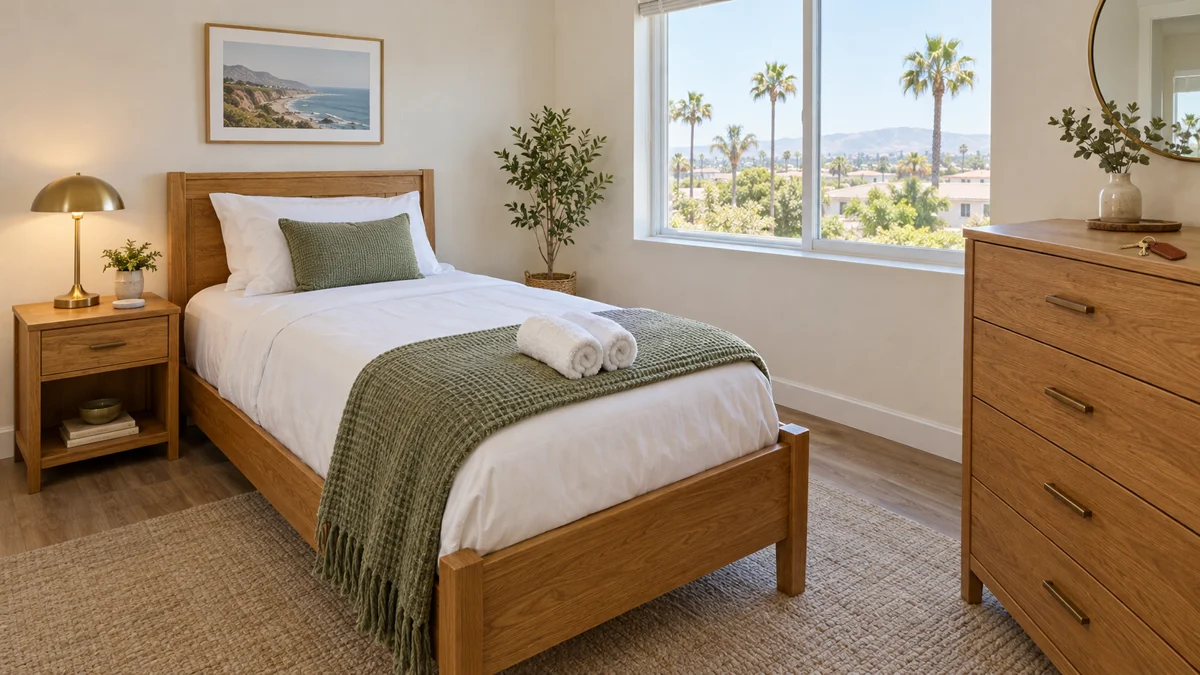
Stop 4. The open bed, dresser & closet (5 min)
What to show and point out: The freshly turned twin XL bed frame, mattress encasement, reading lamp, four-drawer dresser and lockable personal storage drawer
Questions to answer up front: Roommate sleep/work schedule (if a shared two-bed room), bedroom guest rules, and why cooking appliances stay in the kitchen
Stop 5. Dining table fact-sheet review (5 min)
What to show and point out: One-page printed house fact sheet showing the monthly bed rate, security deposit, included utilities, allowed payment methods, and move-in steps
Questions to answer up front: How rent is paid (including representative payees or agency checks), what is needed for resident intake, and the target move-in date
How do California entry notice and Fair Housing rules apply to tours?
Three legal standards govern how you schedule a tour and what you discuss at the dining table:
1. Serving 24-hour written notice before showing an occupied shared room (Civil Code Section 1954)
If the open bed is in a private room or a shared bedroom where both beds are currently vacant, you can show it anytime. However, if Bed B is open inside a shared two-bed room where Bed A is occupied by a current resident, California Civil Code Section 1954 requires you to give the current roommate reasonable advance written notice (24 hours is presumed reasonable) and schedule the showing during normal business hours, unless the roommate is present and consents at the time of entry. Respecting your current resident's privacy during a tour also shows the prospective resident that you run a respectful house.
2. Keeping tour conversations Fair Housing compliant (DOJ & HUD Joint Statement)
Under federal Fair Housing Act principles summarized in the DOJ and HUD Joint Statement on State and Local Land Use Laws and the Fair Housing Act, keep your tour questions focused on objective tenancy qualifications rather than medical history or clinical questions. Explain the universal household rules that every resident signs in the resident agreement: paying monthly rent on time, following the guest, parking and quiet hours policy, keeping shared kitchen and bathroom spaces clean, and living independently without personal care or supervision.
3. Explaining deposits, payment forms and third-party payers clearly (Civil Code 1950.5, 1947.3 & 1962)
Hand every visitor a one-page fact sheet that states the monthly rent and the security deposit terms governed by California Civil Code Section 1950.5. Under California Civil Code Section 1947.3, let prospective residents and case managers know that you accept at least one form of payment that is neither cash nor electronic funds transfer (such as check, money order or cashier's check) as well as third-party payments from a Social Security representative payee, family member or housing agency accompanied by the statutory non-tenancy acknowledgment. Once a resident is approved for intake and move-in, California Civil Code Section 1962 requires the signed agreement to disclose the authorized manager and owner contact details and requires a copy to be delivered within 15 days.
What should you check 15 minutes before a visitor arrives?
Run this quick five-point check 15 minutes before any scheduled tour:
- Bed already turned and staged: Confirm the room turnover checklist is 100 percent finished — never show an unmade mattress or a dresser with the previous resident's belongings still inside.
- 24-hour notice confirmed: If the open bed is in a shared room, verify that written notice was posted or delivered to the current roommate at least 24 hours earlier and knock before opening the door.
- Kitchen sink and counters clear: Wipe the kitchen island, check that no dishes sit in the sink, and point out the empty, labeled refrigerator bin and pantry basket waiting for the new resident.
- Lights and temperature comfortable: Open window blinds for natural light, turn on bedside reading lamps, and air out the room.
- Printed fact sheet on the dining table: Have two printed copies of the house fact sheet ready — one for the prospective resident and one for their caseworker, discharge planner or family member.
How do you track tour inquiries and open beds without double-booking?
When two case managers and a self-pay applicant ask about the same open bed in the same week, sticky notes and text threads quickly lead to confusion over who toured, which referral source sent them, and which bed is still available. Royalty Group Homes links your live bed board directly to your inquiry pipeline and resident intake workflow, so every tour, referral source and bed placement stays organized in one place.
Your first house is free with every feature; two or three houses are $99 a month, and four or more are $199 a month.
Frequently asked questions
Do you need to give 24-hour written notice before showing an open bed in a shared room?
If the open bed is inside a shared two-bed room where another resident currently lives, yes. Under California Civil Code Section 1954, exhibiting a dwelling unit to prospective tenants is a permitted reason for entry, but the housing provider must give reasonable advance written notice (24 hours is presumed reasonable) and schedule the showing during normal business hours, unless the current roommate is present and consents at the time of entry.
What should a prospective resident or case manager see during a 20-minute house tour?
Show the exact bed, mattress, dresser and closet space the resident would rent; the labeled refrigerator shelf and dry-pantry basket assigned to that bed; the shared bathrooms and laundry machines; the posted emergency and utility shutoff map; the backyard patio and driveway parking layout; and a one-page printed house fact sheet listing the monthly bed rate, security deposit and house rules.
What questions should an operator avoid asking during a shared housing tour?
Under the federal Fair Housing Act (explained in the DOJ and HUD Joint Statement), housing providers should not ask intrusive clinical or medical questions about a prospective resident's diagnosis, disability or treatment history. Instead, explain the objective residential expectations that apply equally to every housemate: paying rent on time, keeping shared spaces clean, respecting quiet hours, and living independently without 24-hour supervision or personal care.
Can a hospital discharge planner, VA social worker or family member tour on a resident's behalf?
Yes. Referral partners under 42 CFR 482.43 hospital discharge planning or HUD-VASH case managers often tour a house first to verify cleanliness, bed availability and non-clinical scope, followed by a tour with the prospective resident before move-in.
What written disclosures should be on the tour fact sheet and sample agreement?
Include the monthly rent for the specific bed, the security deposit amount under California Civil Code Section 1950.5, the accepted non-cash payment methods and third-party payer rules under Civil Code Section 1947.3, the authorized manager and owner contact disclosures required at signing under Civil Code Section 1962, and the core house rules on guests, parking and quiet hours.
Related reading
Sources
- Group Home Technical Advisory (2022), page 33, California Department of Housing and Community Development. Many, if not most, group homes do not require a state license.
- Adult Facility Types Licensed by CDSS, California Department of Social Services. Which homes need a state care license, such as an adult residential facility.
- California Civil Code Section 1954, Landlord's Right of Access, California State Legislature. When a California housing provider may enter a dwelling unit and the written notice required for non-emergency entry.
- Joint Statement on State and Local Land Use Laws and the Fair Housing Act, U.S. Department of Justice and U.S. Department of Housing and Urban Development. People in recovery are protected under the Fair Housing Act, and cities may have to grant reasonable accommodations to homes for them.
- California Civil Code Section 1950.5, Security for a Rental Agreement, California State Legislature. California rules for residential security deposits, including deposit caps, pre-departure inspection rights, and the 21-day itemized statement and return deadline.
- California Civil Code Section 1947.3, Allowed Forms of Rent Payment, California State Legislature. California landlords must allow at least one form of rent and deposit payment that is neither cash nor electronic funds transfer, and must accept third-party rent payments accompanied by a statutory non-tenancy acknowledgment.
- California Civil Code Section 1962, Required Rental Agreement Disclosures, California State Legislature. California residential rental agreements must disclose the manager and owner names, phone numbers and street addresses for service, how and to whom rent is paid, and provide a copy of the signed agreement within 15 days.
- Representative Payment Program, Social Security Administration. SSA appoints representative payees to receive and manage Social Security or SSI payments for beneficiaries who cannot manage them directly, and requires payees to keep spending records.
This article is general information, not legal advice. Fair housing, landlord-tenant and local notice rules vary by jurisdiction; have a qualified California housing attorney review your tour intake materials and resident agreement.
Want to track every open bed, tour inquiry and referral partner in one clean workspace? Start free with one house — every feature included, no card and no end date.