
Independent Living Home Shared Bathroom and Laundry Room Rules
How to organize shared bathrooms and laundry rooms in an independent living home or shared housing: morning schedules, caddy storage, USFA dryer safety and habitability.
By Joseph Surgeon, founder of Royalty Group Homes, who runs independent living homes in Oceanside, California. · 10 min read

Right after the shared kitchen, shared bathrooms and the laundry room are where daily habits collide in a six- to ten-bed house. If three housemates all need to shower at 7:00 AM before work, or if a load of damp towels sits in the washing machine from Tuesday morning until Wednesday night, small annoyances quickly turn into roommate friction.
A clear, one-page bathroom and laundry schedule — reviewed during resident intake and posted inside the laundry room and linen closet — keeps morning routines predictable, protects plumbing and dryer vents, and makes daily wipe-downs take less than five minutes.
A note on scope. An independent living home, also called shared housing, rents rooms or beds to adults who live independently, with no care or supervision. In California, many, if not most, such homes do not need a state license. Unlike an Adult Residential Facility licensed by CDSS Adult Care Licensing, where staff assist residents with bathing, grooming, dressing or personal laundry service, every resident in an independent living home handles their own personal hygiene and laundry independently.
What belongs in a five-part shared bathroom and laundry policy?
Include these five practical standards in your house rules addendum so every housemate knows how shared bathrooms and laundry machines operate from day one:
1. Bathroom assignment & peak morning window
Standard shared-home rule: Assign each bathroom to specific bedrooms (3 to 4 beds per bath); limit single bathroom sessions to 20 minutes during peak morning hours (6:00 AM to 8:30 AM)
Why it matters in shared housing: Ensures every housemate can shower and get ready for work or morning appointments on time
2. Personal caddy & clear-counter rule
Standard shared-home rule: Give each bed a labeled cubby basket or shower caddy for toiletries; store bath towels on assigned hooks and leave the sink vanity counter clear after each use
Why it matters in shared housing: Prevents cluttered counters, mixed-up razors or toothbrushes, and makes daily sanitizing effortless
3. Plumbing, drain & exhaust-fan care
Standard shared-home rule: Run the exhaust fan during and 15 minutes after showering; use mesh hair catchers in shower drains; flush only toilet paper (never 'flushable' wipes or paper towels)
Why it matters in shared housing: Prevents mildew, sewer backups and emergency plumbing calls
4. Weekly laundry schedule & operating hours
Standard shared-home rule: Assign each room or bed a primary weekly laundry window; run washers and dryers only between 8:00 AM and 9:00 PM; transfer loads within 15 minutes of cycle completion
Why it matters in shared housing: Eliminates machine bottlenecks and stops late-night spin-cycle noise near bedrooms
5. Lint screen & dryer fire safety
Standard shared-home rule: Clean the dryer lint screen before and after every single cycle; never overload machines or dry rubber-backed mats or items stained with flammable oils
Why it matters in shared housing: Follows U.S. Fire Administration safety rules, cuts drying time and prevents dryer fires
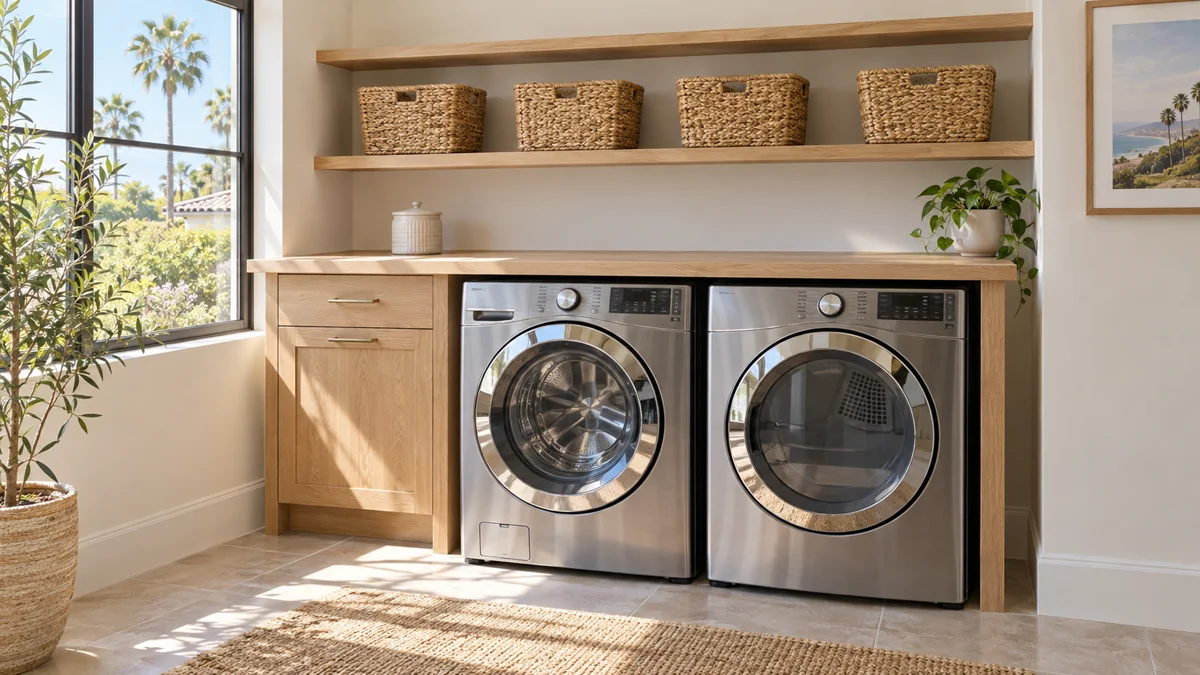
How do U.S. Fire Administration clothes dryer safety rules apply?
In a shared home where six to ten adults wash clothes and bed linens every week, the clothes dryer runs three to four times as many cycles as a typical single-family dryer. Federal guidance from the U.S. Fire Administration (FEMA) on Clothes Dryer Fire Safety highlights four habits that every operator, house manager and resident should follow:
- Clean the lint filter before and after every cycle: USFA advises never operating a dryer without a lint filter and cleaning the screen before and after each load. Keep a small ceramic or metal lint bin right on the laundry counter so residents wipe the screen into the bin every time they open the dryer door.
- Inspect behind the dryer and use rigid metal venting: During your monthly maintenance and safety walk-through, vacuum lint from behind the dryer and check that the rear exhaust duct is not crushed, kinked or restricted.
- Verify the exterior exhaust damper opens freely: Walk outside while the dryer is running to confirm warm air is exhausting briskly and that the outdoor vent flap is not blocked by lint, plants or pests.
- Finish cycles before 9:00 PM bedtime: Setting laundry hours from 8:00 AM to 9:00 PM ensures no dryer is left running unattended overnight while the house is asleep and protects every resident's quiet possession under California Civil Code Section 1927 when quiet hours begin at 10:00 PM.
How do California habitability and plumbing laws apply to shared bathrooms?
Two California Civil Code sections divide bathroom and laundry upkeep fairly between the housing provider and residents:
1. Operator duties: hot water, drainage and electrical safety (Civil Code Section 1941.1)
Under California Civil Code Section 1941.1, a residential dwelling must provide plumbing facilities in good working order, a water supply capable of producing hot and cold running water connected to an approved sewage disposal system, and electrical lighting and wiring maintained in good working order. In a shared house, size your water heater for back-to-back morning showers, protect all bathroom and laundry outlets with Ground Fault Circuit Interrupter (GFCI) receptacles, and keep working exhaust fans in every bathroom.
2. Resident duties: sanitary use and drain protection (Civil Code Section 1941.2)
Under California Civil Code Section 1941.2, every tenant has an affirmative obligation to keep the part of the premises they occupy and use clean and sanitary and to properly use all plumbing, electrical and gas fixtures. Spell out in your resident agreement that only human waste and toilet paper may be flushed down toilets — never baby wipes, “flushable” wipes, paper towels or hygiene products — and provide a covered step-can trash bin and a mesh shower hair catcher in every bathroom.
How do you keep bathroom, cubby and laundry assignments tied to your bed board?
Just like refrigerator bins, the cleanest way to label bathroom cubbies, towel hooks and weekly laundry days is by permanent bed code — such as Room 1 - Bed A (Bath A, Cubby 1, Mondays) — so you never have to rewrite schedules when a bed turns over. Royalty Group Homes keeps your live bed board, room and bed codes, and resident roster in one place across every house in your portfolio.
Your first house is free with every feature; two or three houses are $99 a month, and four or more are $199 a month.
Frequently asked questions
How many residents should share a bathroom in an independent living home?
In a well-run shared house, assign no more than three or four residents to a full bathroom (for example, Rooms 1 and 2 use Hall Bath A; Master Room 3 uses Bath B). Pairing a clear bathroom assignment with a 20-minute courtesy limit during peak morning hours (6:00 AM to 8:30 AM) prevents work-shift bottlenecks.
Why should toiletries be stored in personal caddies instead of left on the vanity counter?
When four adults leave razors, toothbrushes, shampoo bottles and towels across the sink counter and shower ledge, the bathroom becomes impossible to wipe down during daily chores. Giving each bed a labeled cubby basket or portable shower caddy keeps the vanity counter clear, sanitary and easy to clean in two minutes.
How do you stop wet laundry from sitting in the washing machine all afternoon?
Assign each bedroom or bed a primary weekly laundry day (plus an open weekend window) and include a 15-minute transfer rule in your house rules addendum: residents set a phone timer when starting a wash or dry cycle and move clothes within 15 minutes of completion so the next housemate's window is never blocked.
What fire-safety rules apply to a shared laundry room?
According to the U.S. Fire Administration (FEMA), failure to clean lint is the leading cause of residential clothes dryer fires. Require residents to clean the lint filter before and after every cycle, never run the dryer without a lint filter or when leaving the house unattended, and inspect the rear exhaust duct during your monthly maintenance walk-through to verify it is not crushed or restricted.
Does an independent living home assist residents with bathing, dressing or personal laundry?
No. Hands-on assistance with bathing, dressing, grooming or personal laundry is a regulated Activity of Daily Living (ADL) provided in an Adult Residential Facility licensed by the California Department of Social Services. In an independent living home or shared house, residents are independent adults who manage their own personal hygiene and do their own laundry.
Related reading
Sources
- Group Home Technical Advisory (2022), page 33, California Department of Housing and Community Development. Many, if not most, group homes do not require a state license.
- Adult Facility Types Licensed by CDSS, California Department of Social Services. Which homes need a state care license, such as an adult residential facility.
- Clothes Dryer Fire Safety, U.S. Fire Administration (FEMA). Prevent clothes dryer fires by never operating a dryer without a lint filter, cleaning the lint filter before and after each cycle, cleaning lint behind the dryer, and checking that the exhaust venting system is not crushed or restricted.
- California Civil Code Section 1941.1, Untenantable Dwelling Characteristics, California State Legislature. Minimum habitability standards for California residential dwellings, including weatherproofing, plumbing, hot and cold water, heating, electrical, clean premises, and working floors, stairs and railings.
- California Civil Code Section 1941.2, Tenant's Affirmative Obligations, California State Legislature. California tenants have affirmative obligations to keep the part of the premises they occupy and use clean and sanitary, dispose of rubbish properly, and properly use electrical, gas and plumbing fixtures.
- California Civil Code Section 1927, Quiet Possession, California State Legislature. An agreement to let upon hire binds the housing provider to secure to the resident the quiet possession of the premises during the term of the hiring.
This article is general information, not legal or building-code advice. Confirm local plumbing, fire and housing requirements with your city or county and have a qualified California housing attorney review your resident agreement and house rules.
Want a clean bed board that keeps every room, bed and house roster organized? Start free with one house — every feature included, no card and no end date.